By Florienne Loder
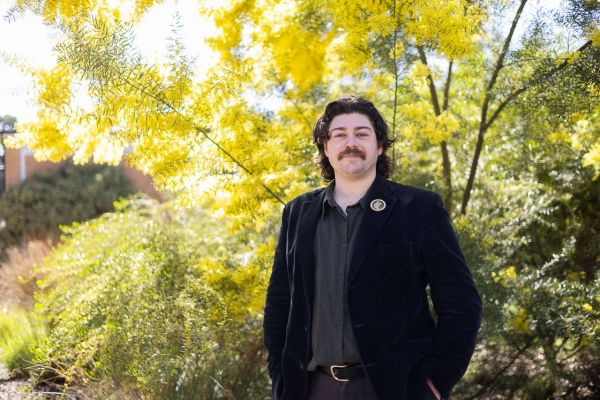
Credit: Peter Casamento.
“One of the first realisations I had that I was poor growing up, was actually a dental situation,” says Patrick Mercer (A BA Melb), a proud Wadawurrung man from Ballarat and Geelong and First Nations lecturer at the Melbourne Dental School. Mr Mercer broke two front teeth as a 13-year-old whilst playing footy.
“My friends at school were like, ‘Oh, it’s fine. You’ll just get a cap glued on. It’s an easy fix’,” he recalls. Mr Mercer had to wait weeks for his teeth to be repaired. When he did receive care, he wasn’t terribly happy with it as the cap "seemed too big and it didn't sit in my mouth right. But I took whatever help I could get for what my family could afford."
Many First Nations people face cultural and structural barriers to obtaining dental care.
These personal experiences, but also his qualifications as an archeologist and experience working in First Nations health advocacy and research, have led Mr Mercer to teach about cultural safety and the impacts of colonialism on First Nations people at the Melbourne Dental School.

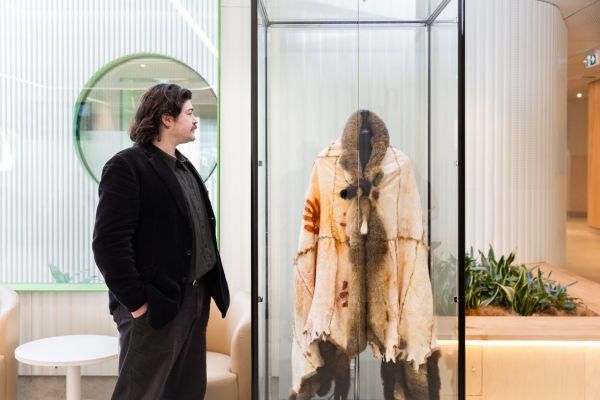
Credit: Peter Casamento.
Colonisation – the root cause of ill health
Aunty Muriel Bamblett is quoted as saying: “Every problem Aboriginal Victorians have today is a direct result of past policies, legislation, and discriminatory practice. This is the past and the present.”
“So much of what we would describe as ‘truth-telling’ and really getting to the core of the social determinants of First Nations health in Australia, is either directly caused, or indirectly compounded by colonisation,” explains Mr Mercer.
Learning about our history can tell us so much about contemporary issues and social determinants and socioeconomics and maybe, as well, health refusal and avoiding dental visits. Patrick Mercer
The book Dhoombak Goobgoowana Volume 1, published in May 2024, examines the human remains held by the University of Melbourne, the widespread interest in and promotion of eugenics and the research that was dependent on the unacknowledged expertise of Indigenous knowledge holders.
Mr Mercer recalls that when he was a student at the University of Melbourne they were very averse to having that conversation. “It’s really come a long way just from the time that I was a student to where I’m now,” Mr Mercer reflects.
Mr Mercer points to the faculty’s ‘Ways of Knowing’ program and the work of Professor Shawana Andrews, Associate Dean Indigenous in the Faculty, in setting up Billibellary’s Walk and building relationships with the Wurundjeri, who are the Traditional owners of the Country that the University sits on.

Cultural safety training not just a ‘cherry on top’
Nowadays Patrick Mercer’s work focuses on developing teaching content, lecturing, and workshop facilitation in First Nations cultural safety and supporting First Nations students as they undertake their dental degrees. His work leads him to engage with alumni through the Indigenous Dental Association of Australia (IDAA) and to help meet regulatory requirements around First Nations cultural safety.
The Australian Dental Council (ADC), and the Australian Health Practitioner Regulation Agency (AHPRA) now require that clinicians recognise that cultural safety isn't optional, he explains. “It's not best practice, it is practice; without cultural safety, there is no clinical safety. It’s a core component of what is required to be a proficient healthcare provider in Australia.”
Mr Mercer advises that it’s important when clinicians engage with First Nations patients, that they consider their specific historical and cultural background and acknowledge the barriers they face but also embrace the opportunities and strengths people bring through their knowledge, relationships and connections.
Aboriginal communities have incredibly rich and tight-knit kinship and family dynamics that we can leverage as clinicians and as community. Patrick Mercer
Teaching cultural safety to dental and oral health students
The Melbourne Dental School has been a leader in developing cultural safety content and clinical placement experience for dental students in their courses since the early 2000s. Leading the development of national curriculum in this area and appointing a lecturer in First Nations Health were natural developments for the school.
Working with Professor Julie Satur, Patrick Mercer supports the academic staff at the school in integrating cultural safety and First Nations healthcare provision into their courses, and has led cohort discussions with oral health therapy, dentistry and dental specialist students on ideas of what cultural safety looks like, reflections on their own practice and application in clinical settings.
He explains that it’s important to build a relationship over time through deeper conversations – or ‘yarning’ – with patients and to offer them and communities free, prior and informed consent and a multitude of options, rather than deciding as the clinician and the authority.
“It’ s going a bit deeper and offering up some of yourself, some of your identity to build those trust relationships, whether it be a footy team or something deeper.”
Pastoral care: Caring for the student community
From coffee catch-ups, developing activities, or simply knowing who the Indigenous students are and ensuring they’re not carrying too much ‘cultural load’, Patrick Mercer also provides First Nations pastoral care to students at the University of Melbourne.
“Universities can be places where really difficult conversations can be happening. So just making sure that they’re well in themselves and feeling supported, both spiritually and socially.”
The Melbourne Dental School offers a Bachelor of Oral Health (Oral Health Therapy), Doctor of Dental Surgery (Dentistry) and Doctor of Clinical Dentistry (Dental Specialist)
Key milestones at the University of Melbourne and in Victoria for Truth and Treaty
- 28 May 2024
-
The University of Melbourne published Volume I of the book Dhoombak Goobgoowana: A History of Indigenous Australia and the University of Melbourne.
The book was written and edited by Redmond Barry Distinguished Professor Marcia Langton AO and historians Dr Ross L Jones and Dr James Waghorne and published by Melbourne University Publishing.
‘Dhoombak Goobgoowana’ means ‘truth-telling’ in the Woi Wurrung language of the Wurundjeri Woi Wurrung people, on whose unceded lands several University of Melbourne campuses are located. The book included chapters on the University of Melbourne’s colonial and eugenics history and complicity in scientific racism.
- 2 July 2025
-
The Victorian Yoorook Justice Commission released Australia’s first Indigenous-led truth telling report.
This report found that the First Peoples of Victoria have endured crimes against humanity and genocide since the beginning of colonisation in Victoria – and are still being impacted by systemic injustice today as a result.
- 12 August 2025
-
Dhoombak Goobgoowana, Volume 2 was published.
- 9 September 2025
-
Australia’s first treaty between a state government and Aboriginal and Torres Strait Islander people was introduced to the Victorian parliament.