By Florienne Loder
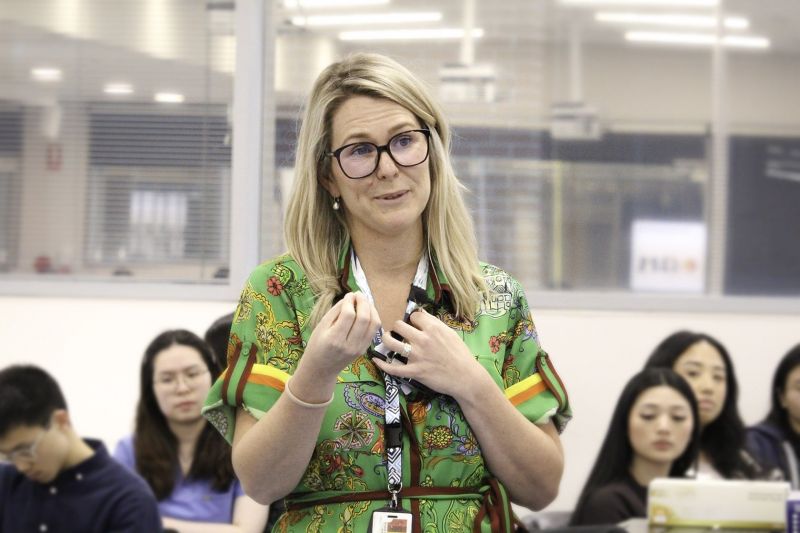
“I think for me, it was a natural fit,” says Claire Mustchin of her role as the Melbourne Dental School’s Curriculum Coordinator with the Collaborative Practice Centre. Ms Mustchin, a Senior Lecturer in Dental Public Health, is an oral health therapist with a Master of Public Health and a Graduate Certificate in Educational Design.
The Collaborative Practice Centre (CPC), a strategic initiative of Advancing Health 2030, has developed the ‘Ways Curriculum’ for interprofessional collaborative practice for the Faculty of Medicine Dentistry and Health Sciences, and Ms Mustchin has been tasked with embedding this in the oral health and dentistry curriculum. The Ways Curriculum is a faculty-wide curriculum, to ensure that all students who graduate from the Faculty of Medicine, Dentistry, and Health Sciences programs at the University possess the skills for teamwork in interprofessional health and social care teams. ‘Ways’ refers to ways of knowing, learning and leading together for person-centred care.
“Understanding that health is a social issue, rather than just focusing on treating disease, that's always been an interest of mine. So, there's a natural alignment there between that and interprofessional collaborative practice,” says Ms Mustchin.
Why teaching teamwork is crucial to our future
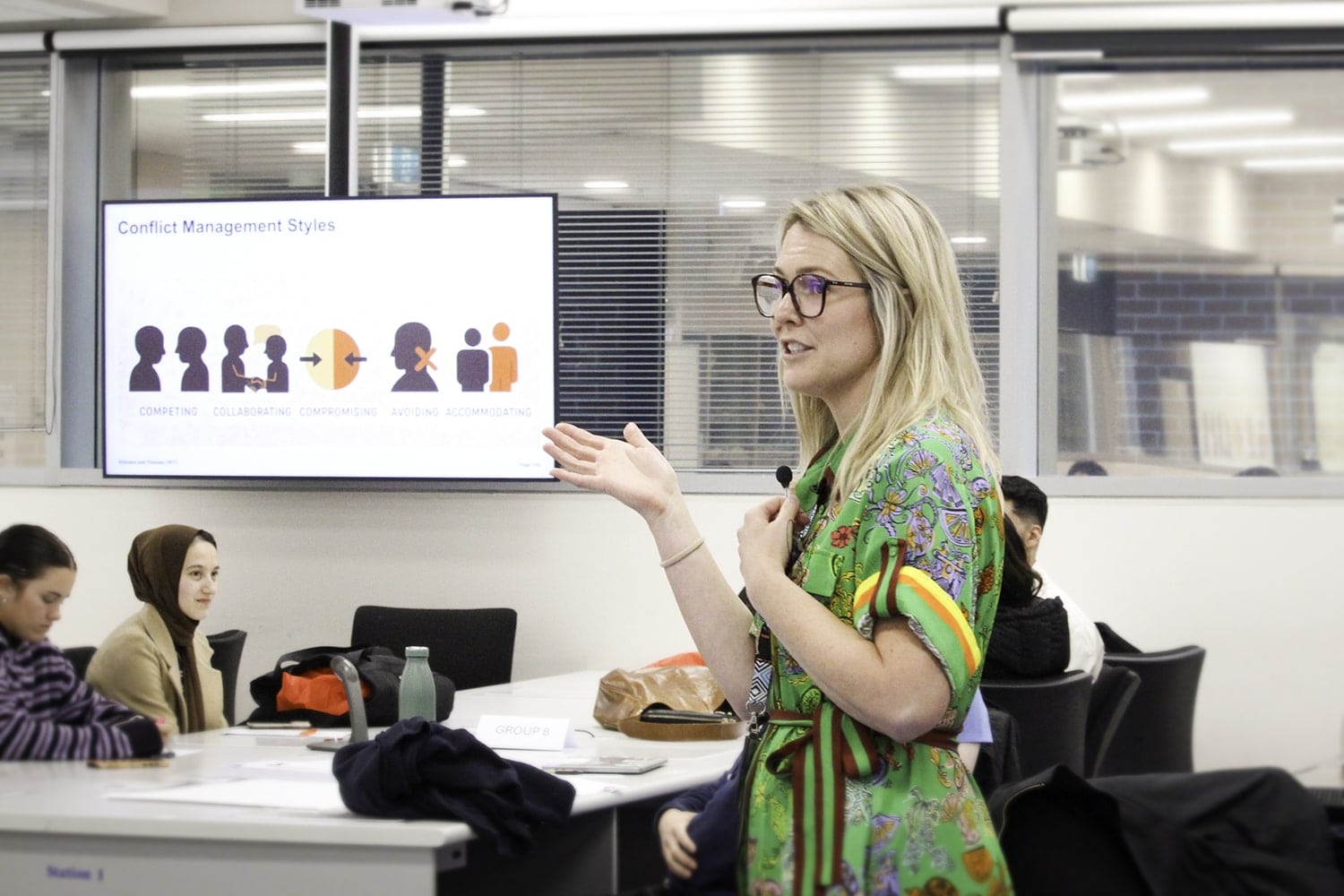
“Healthcare can achieve more for patients when professionals from different disciplines are skilled in collaborative practice and when the system supports them to do that,” explains Ms Mustchin.
“Health will improve because healthcare will be more efficient.”
Whilst teamwork is an important facet of oral healthcare, and might come naturally for some, it’s also a set of skills and attributes that can be taught and encouraged.
Becoming a good team player: Attributes needed for effective teamwork
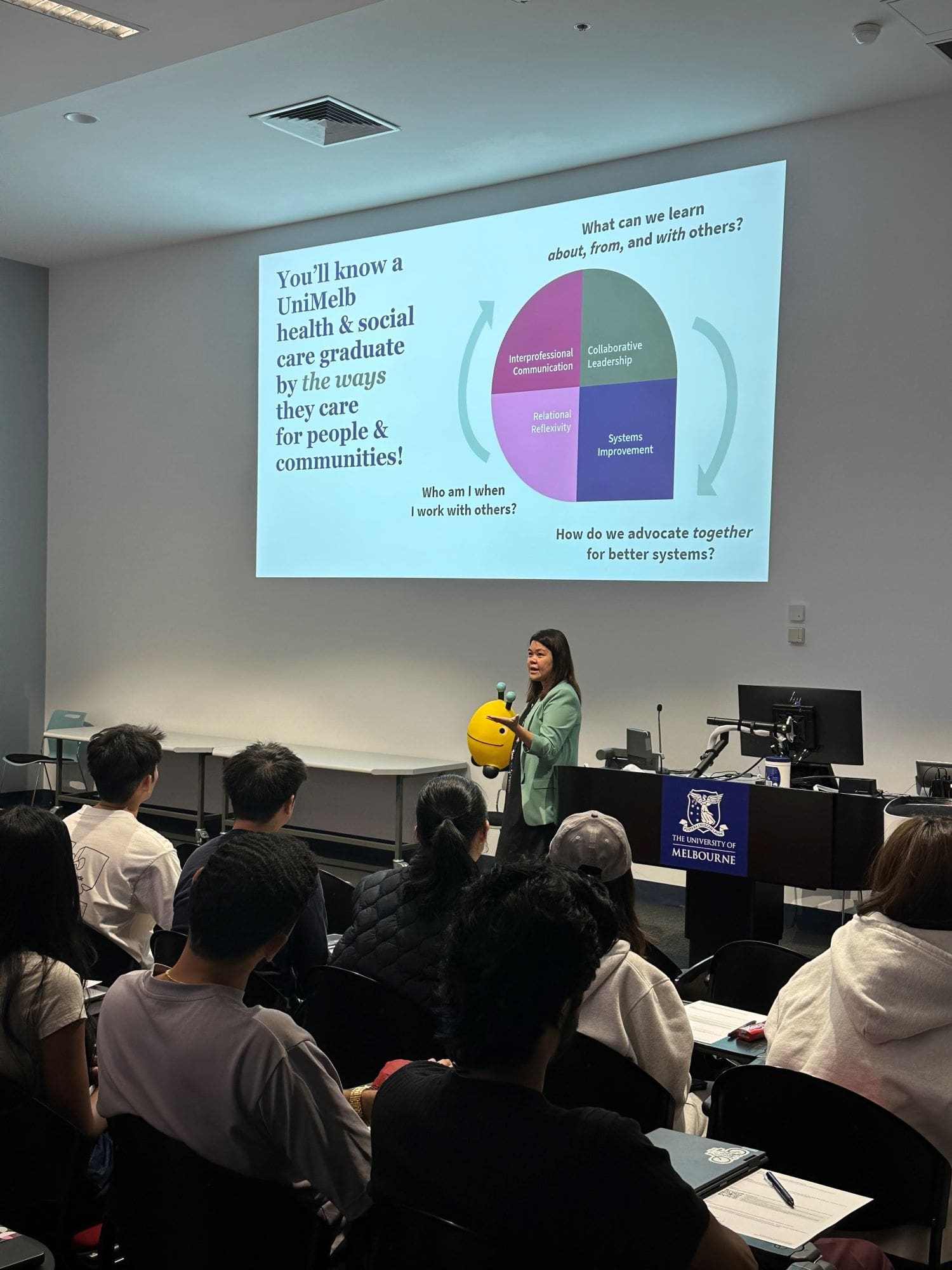
The Ways Curriculum focuses on encouraging specific attributes that align with evidence for interprofessional collaborative practice internationally: ‘relational reflexivity’, ‘interprofessional communication’, ‘collaborative leadership’ and ‘systems improvement’ and brings students from different disciplines together to learn with and from each other.
‘Relational reflexivity’ is a skill used by individuals and teams to reflect on actions and interactions to foster mutual understanding between team members. It is a crucial attribute for teams to work effectively. Claire Mustchin
Using plain language, or language that is accessible to all health professionals, is really important for interprofessional teams to work together effectively. ‘Guess the jargon’ is a fun game developed for interprofessional communication workshops, where students try to guess which discipline certain professional language comes from.
But the Centre doesn’t stop there. ‘SBAR’ stands for Situation, Background, Assessment, and Recommendation, and is an evidence-based clinical communication tool used in handovers of care from one practitioner to another. This is just one of the communication strategies students will learn about through the Ways Curriculum.
“What we’re doing now is providing students from different disciplines an opportunity to learn teamwork skills with and from each other in a supportive learning environment,” explains Ms Mustchin.
“It’s important to have these skills as they enter the workforce and engage and advocate for interprofessional collaborative practice.”
Eyes, ears and mouth: opportunities to practice and learn together
The Collaborative Practice Centre is also looking to support existing initiatives across the faculty that already include interprofessional education.
The Director of the Bachelor of Oral Health Program, Associate Professor Roisin McGrath, has developed the ‘Eyes, Ears, and Mouth’ program where Melbourne Dental students together with speech pathology, optometry and audiology students conduct their discipline-specific screenings at primary schools. “It’s a great way for students to experience collaboration across health disciplines,” explains Ms Mustchin.
As part of the second-year Health Promotion subject in the Bachelor of Oral Health, students go to residential aged care facilities and a special needs primary school to observe how people work within those different environments and communicate with residents or school students. Ms Mustchin is also looking for opportunities for Bachelor of Oral Health and Doctor of Dental Surgery students to learn with and from other students from different health professions while on placements.
“Being the Melbourne Dental School CPC Curriculum Coordinator has allowed me to engage in building capacity for collaborative practice in our future dental practitioners, which I believe will lead to improved health outcomes across communities, so beyond just what we do one-on-one with patients,” says Ms Mustchin.
Learn more about the Collaborative Practice Centre