By Jane Metlikovec
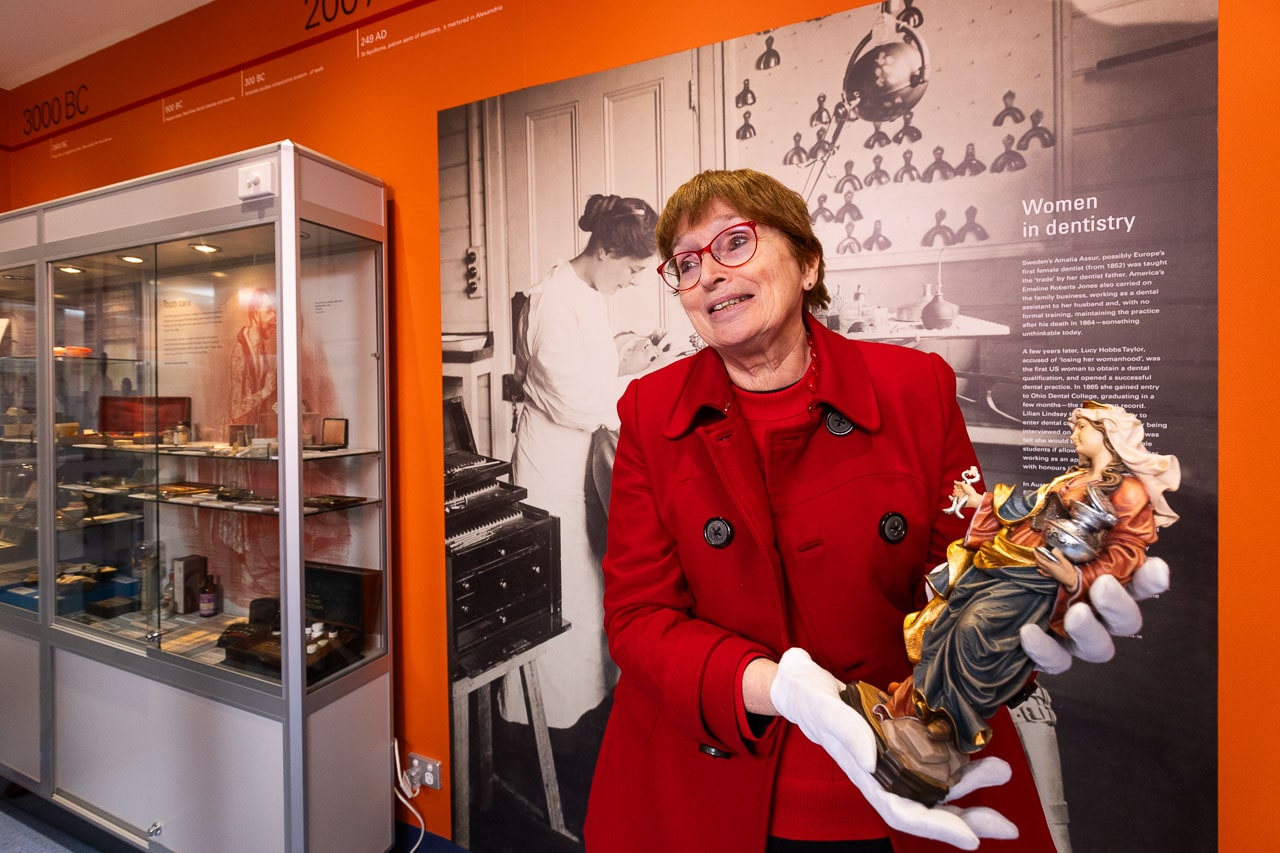
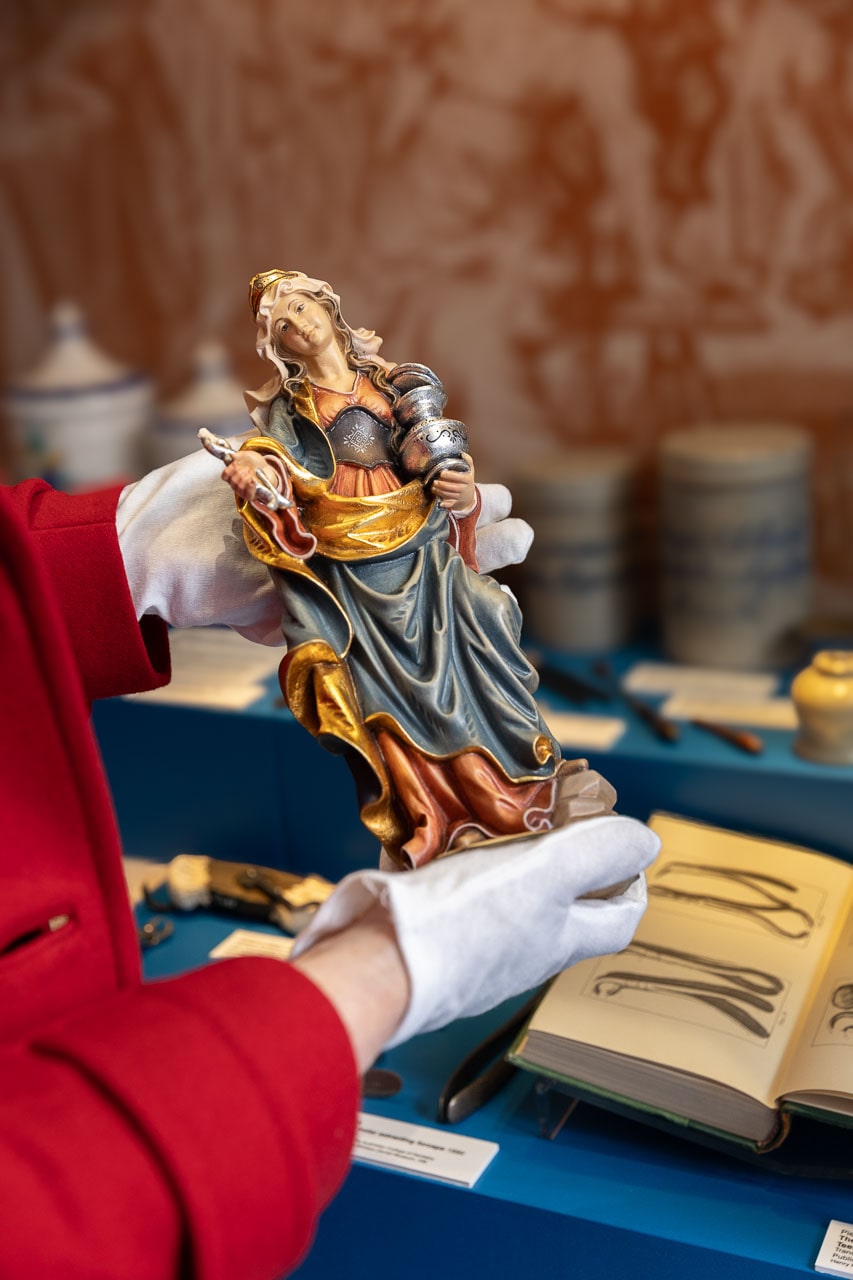
Have you ever seen an image of Apollonia? She is the Patron Saint of Dentists who died in 249 AD. She is usually represented with pliers in her hands holding an extracted tooth, giving dentistry a branding problem.
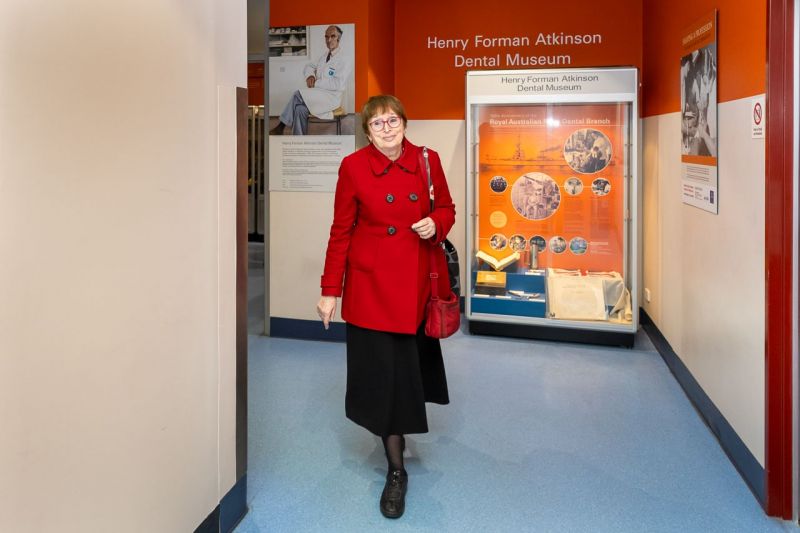
According to Dr Jacquline Healy, Director Faculty Museums, Medicine, Denistry and Health Sciences and Curator of the Henry Forman Atkinson Dental Museum on the ground floor of Melbourne Dental School, association of dentistry and suffering is hard to break.
Credit: Peter Casamento
Dentistry – always a place of innovation
"The early days of dentistry were defined by extraction and pain," says Dr Healy.
"When people ask what I do and I say I’m a curator of the Dental Museum, they immediately say, ‘I’m afraid of the dentist.’ My response is, ‘Well, it’s not my fault, it’s that history, that narrative of extraction. Apollonia, the saint of dentistry, the martyr, she’s holding pliers and a tooth in her hand.’ And it was not until the mid-19th century that you had anaesthetics. Before that, you just had alcohol.”
In moving away from the pain of the past, the real history of dentistry comes to life.
Something that is really important to know about dentistry, is that it's always been a place of innovation, right from the very beginning. Dr Jacquline Healy
“Who pioneered the use of ether? It was the dentists. So, dentists are really fundamental in the early development of anaesthetics. I think that's an important point to make and is why innovation is something we showcase here at the museum.”
Taking a quick walk through the collection, it’s easy to see this on display.
Credit: Peter Casamento
Australia’s first dental X-ray machine and other treasures
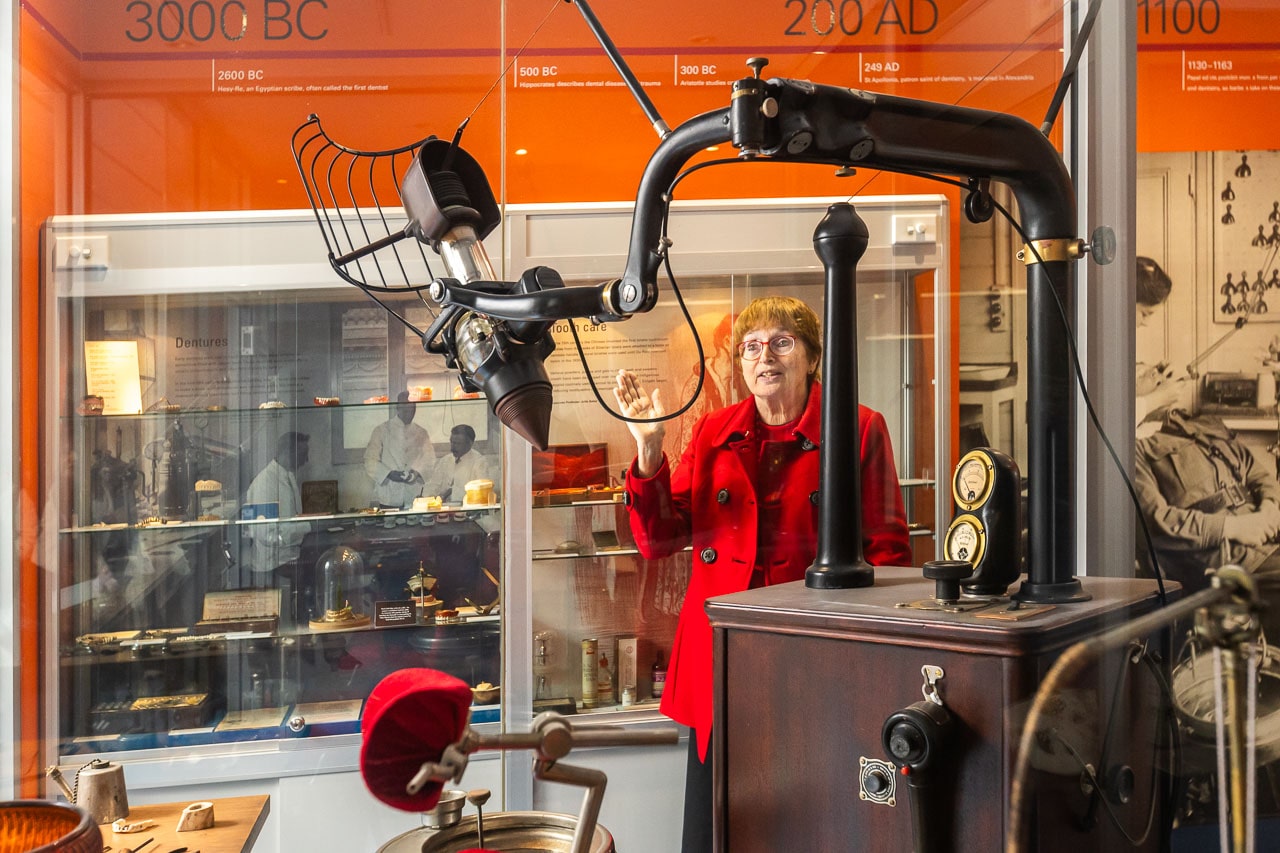
Among the museum’s treasures is a 1920s Ritter Dental X-ray machine, believed to be the first of its kind used in Australia. It was gifted to the museum by Dr David Spell, who had salvaged it after a local dental practice upgrade in Perth.
“Dr Spell so loved the old piece of equipment that he took it with him to Canberra, Brisbane and finally to Melbourne as he moved around the country for work. He gifted it to the museum in 2022,” explains Dr Healy.
“And it was like he was parting with his best friend. It had been in the hallway of every house he ever owned and he said, 'I just wish my wife was still alive because she was trying to get rid of it for years!’”
Dr Healy, who has been at the helm for over 10 years, describes the importance of the machine to the collection.
It is magnificent and beautifully restored and is a reminder of what radiology did. It transformed how treatments could be delivered in dentistry. Dr Jacquline Healy
We step back in time through other innovations and dental history, including how WWI saw dentists upgrade from stretcher-bearers to vital roles in conflict hospitals that eventually pioneered facial plastic surgery. Also, how the rich used to have the worst teeth because they were the only people who could afford the delicacy of sugar, and how the tables have turned to the overcorrection of today.
For Dr Healy these are important messages of knowledge growth to share with the many Melbourne Dental School students who pass the museum en route to lectures and classes.
Connecting the next generation of dentists with history
“I see the museum as a place where students can go and see the heritage of their profession... to know where they came from and where they’re going,” she says.
“I think that's where history is invaluable to students in the Faculty of Medicine, Dentistry and Health Sciences – they can see that the discoveries we now utilise or that we have discarded didn't get there through a straight line. Often, they got there through trial and error.”
The Henry Forman Atkinson Dental Museum is open 9.00am – 5.00pm Monday to Friday. Entry is free.