By Jane Metlikovec
It’s a familiar sight to dentists worldwide – an elderly patient suffering with missing teeth or loose dentures, and without enough bone left in their jaw to support a traditional dental implant.
They’re in frequent pain, it’s a struggle to eat, and their health and wellbeing takes a hit.
Sure, many could go through a bone graft, where bone is taken from their chin or elsewhere in their jaw or hip to build up the bone in their mouth, in a process known as autogenous grafting.
There are other graft solutions, too. But the process can be painful and protracted over weeks or months and carries its own risks. For some, especially older patients, it’s a bridge they’re not willing to cross, and for others, it’s sometimes too risky for them to even be given the choice.
“Let’s say you’re 65 years old and missing your back teeth for 20 years,” says Melbourne Dental School’s Roy Judge (MDS 1997, PhD 2006), an Associate Professor in Prosthodontics.
You’ve been wearing a denture that keeps moving and every time you bite, it digs into soft tissue. The quality of life and dignity for these older patients is reduced. This is the group we’re trying to help. Associate Professor Roy Judge
Flipping the script on dental implants
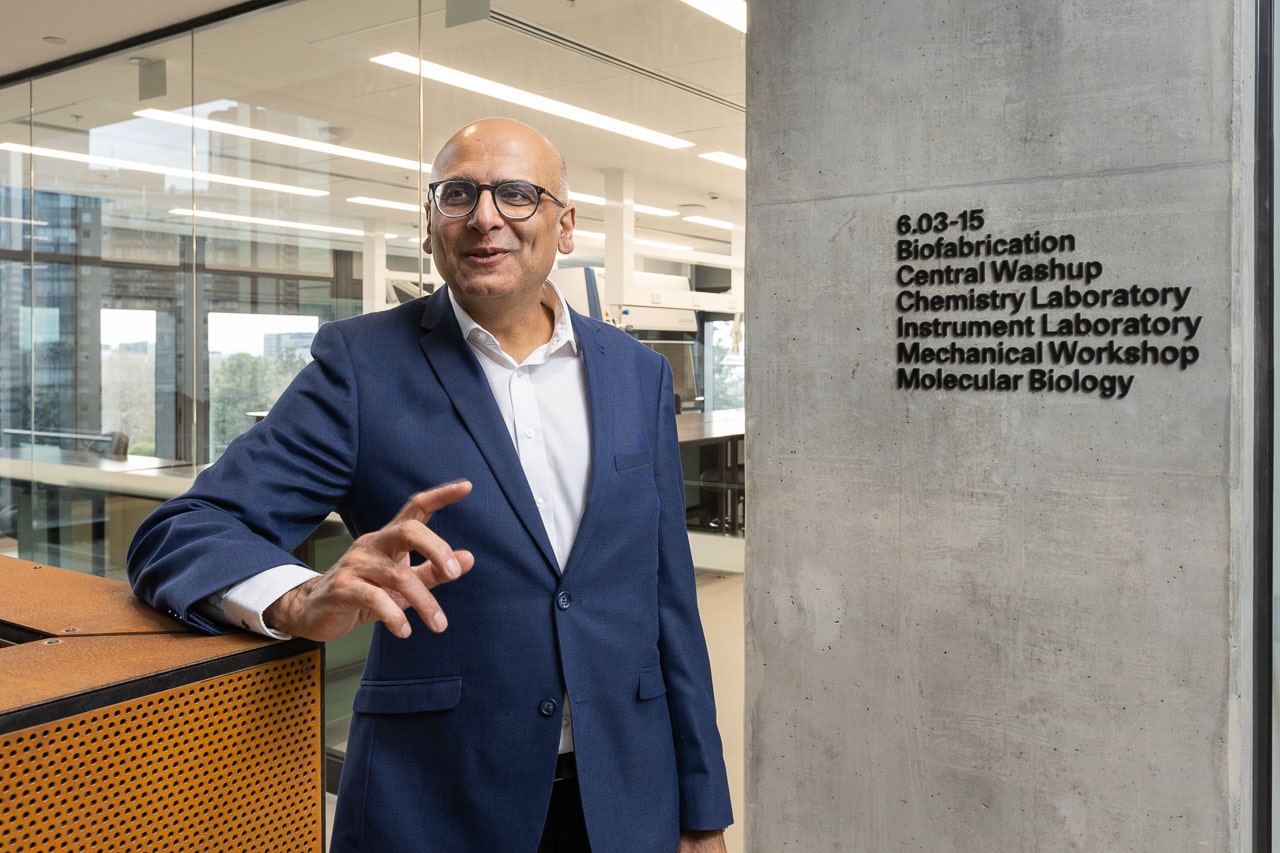
By ‘help’, Associate Professor Judge means dedicating the past 12 years – and the foreseeable future – to working with a strong team of researchers, clinicians and scientists across multiple disciplines to create an innovative new dental implant.
-

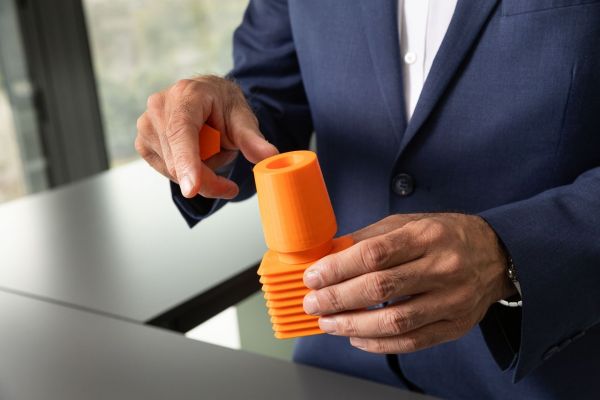
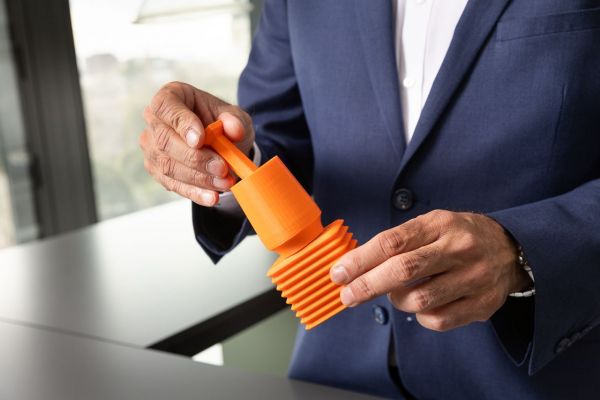
A close-up image of The Rectangular Block Implant held by Associate Professor Roy Judge. Credit: Peter Casamento -
Associate Professor Roy Judge stands with a prototype of the Rectangular Block Implant in a laboratory space in the Aikenhead Centre for Medical Discovery. Credit: Peter Casamento -
Associate Professor Roy Judge stands with a prototype of the Rectangular Block Implant in a laboratory space in the Aikenhead Centre for Medical Discovery. Credit: Peter Casamento -
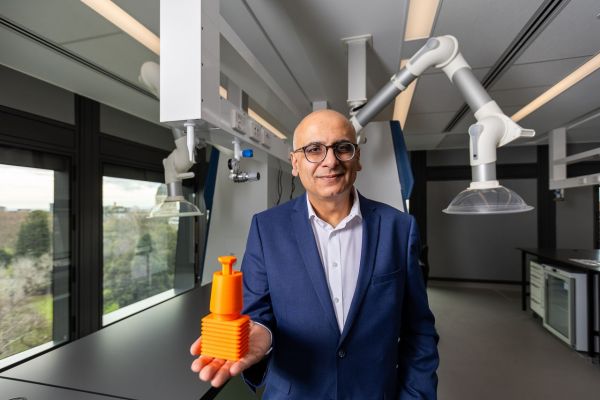
Associate Professor Roy Judge stands with a prototype of the Rectangular Block Implant in a laboratory space in the Aikenhead Centre for Medical Discovery. Credit: Peter Casamento
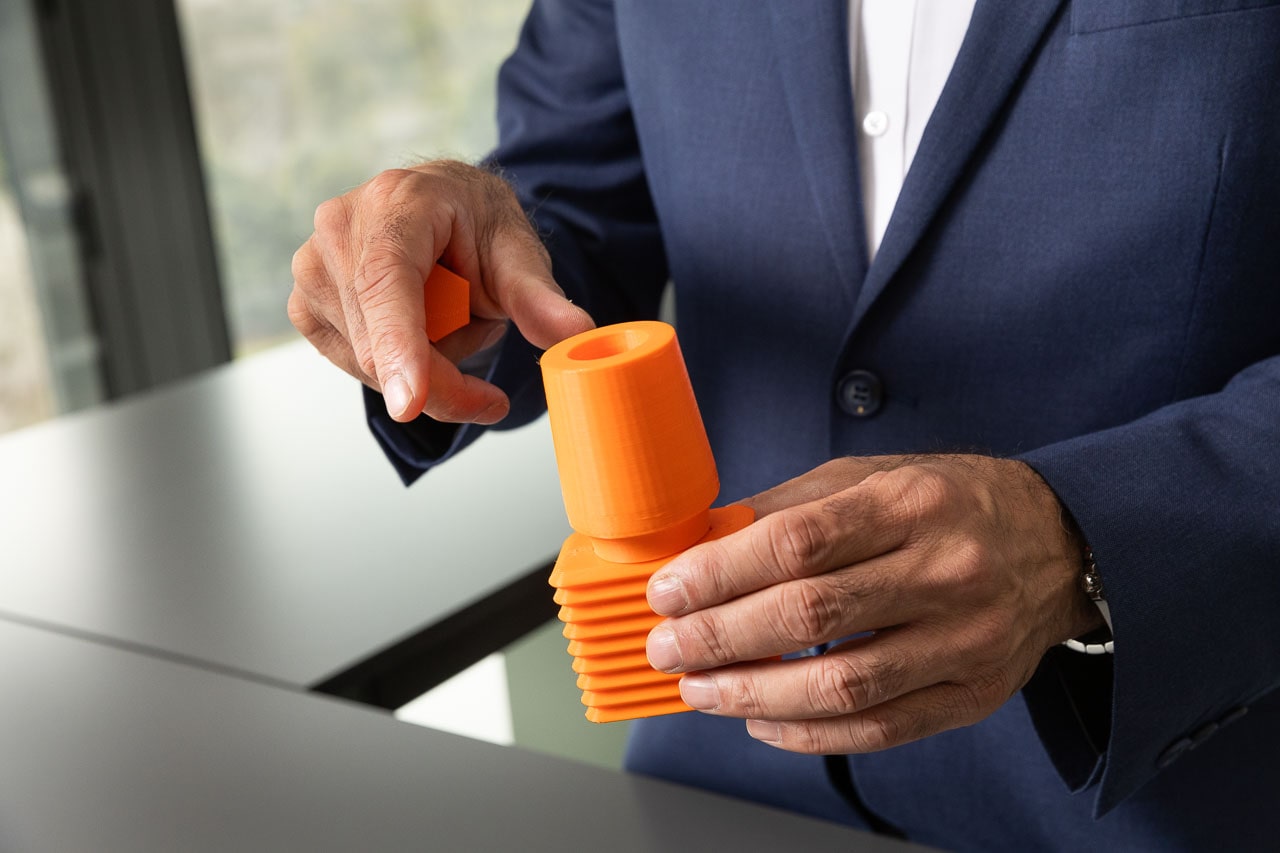
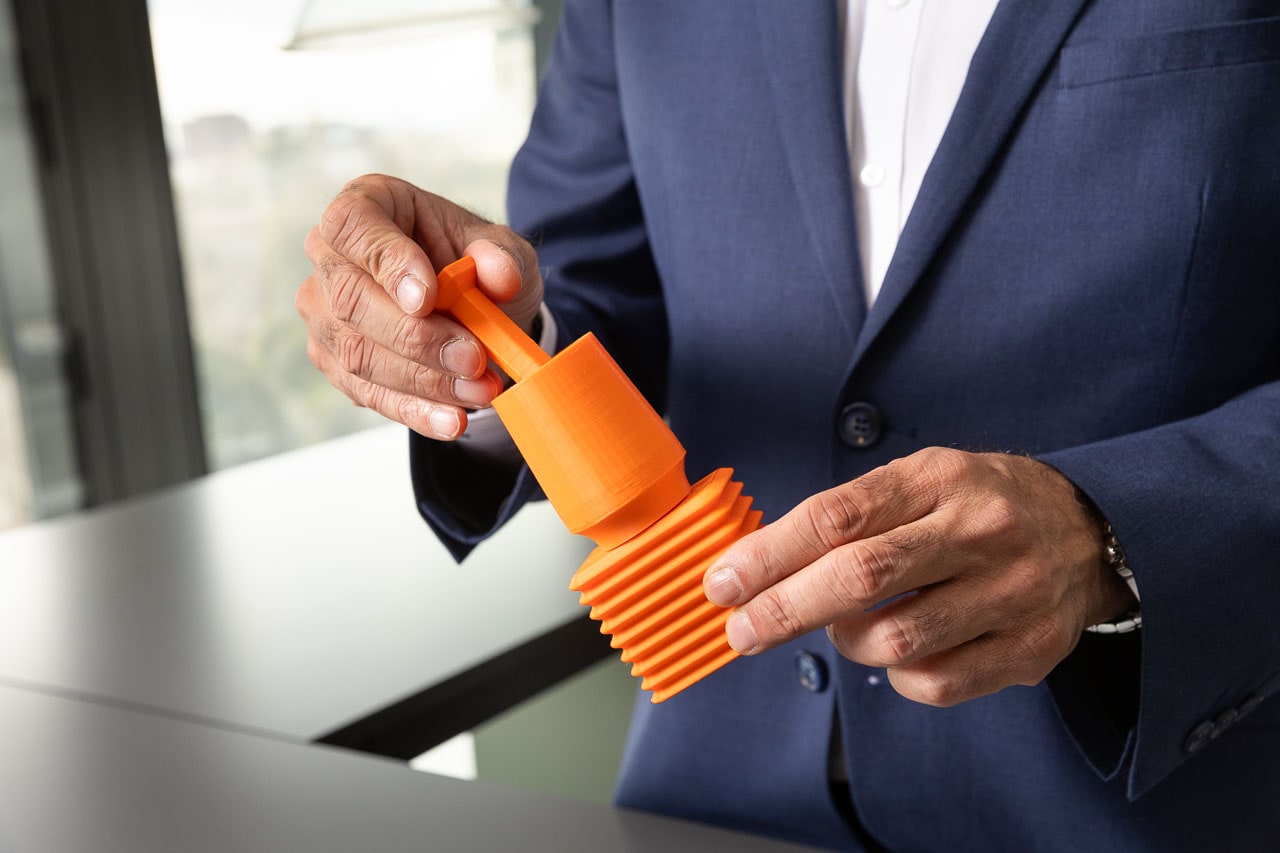
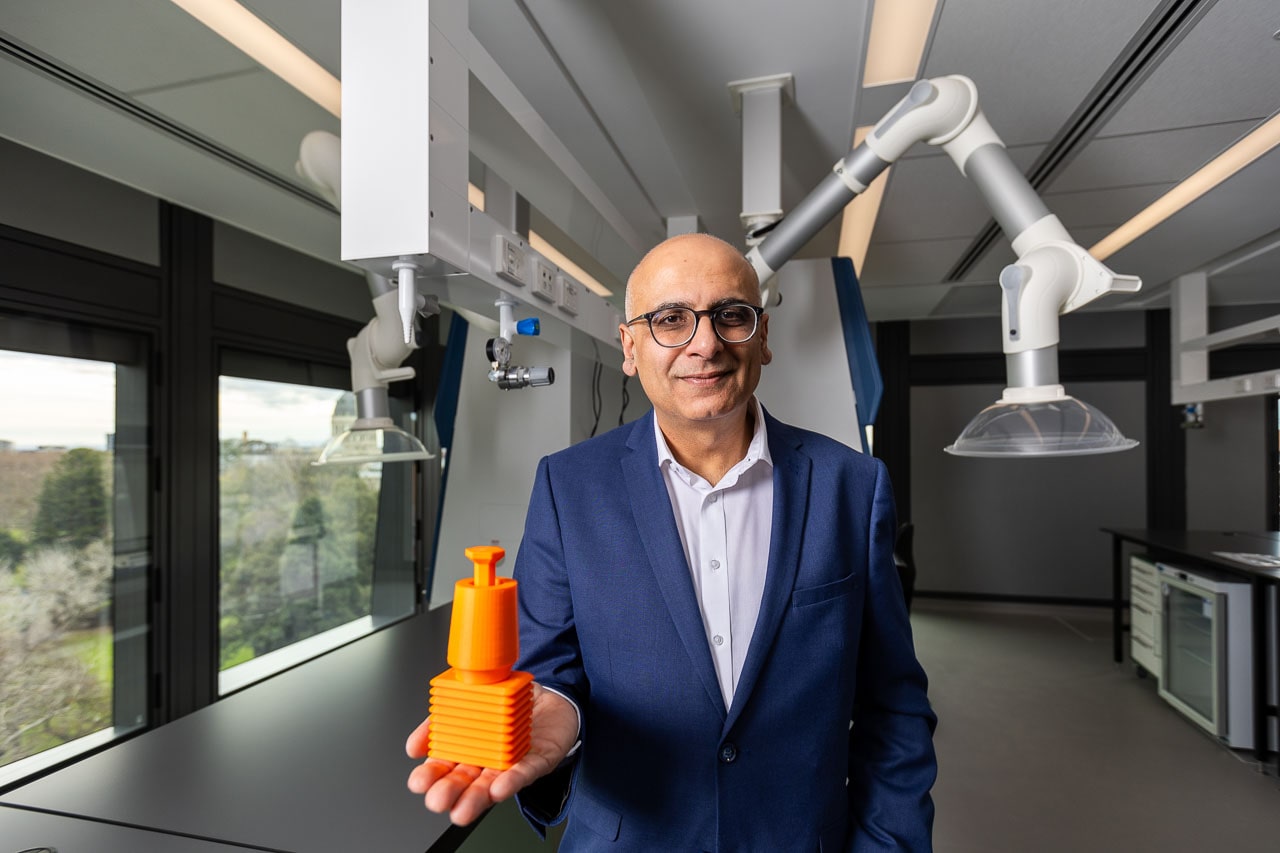
Developed by Dr Tim Gazelakis, Associate Professor Judge and Associate Professor Joseph Palamara, the Rectangular Block Implant (RBI) flips the current approach – quite literally – from using a vertical implant to a horizontal one and is the first solution of its kind to be designed and prototyped in Australia.
“We decided to make an implant that fits into the available bone,” explains Associate Professor Judge.
“These patients often need extensive grafting to build up bone, but we realised that if you use the bone that's already there in the horizontal trajectory, you don't need to use extensive grafts. Traditional implants are vertically oriented and need height, but we turned the implant around to use the horizontal space, where patients typically still have good bone.
“So, instead of a cylindrical implant tapped vertically into bone, we created a press fit rectangular implant with the same surface area, just oriented horizontally."
From lab to next-gen commercialisation
While Associate Professor Judge says the concept is simple, rightfully, the process to product creation and completion is long. Over recent years, the team has made promising progress, moving from animal studies to human clinical trials and now on to independent testing – all on a pathway towards commercialisation.
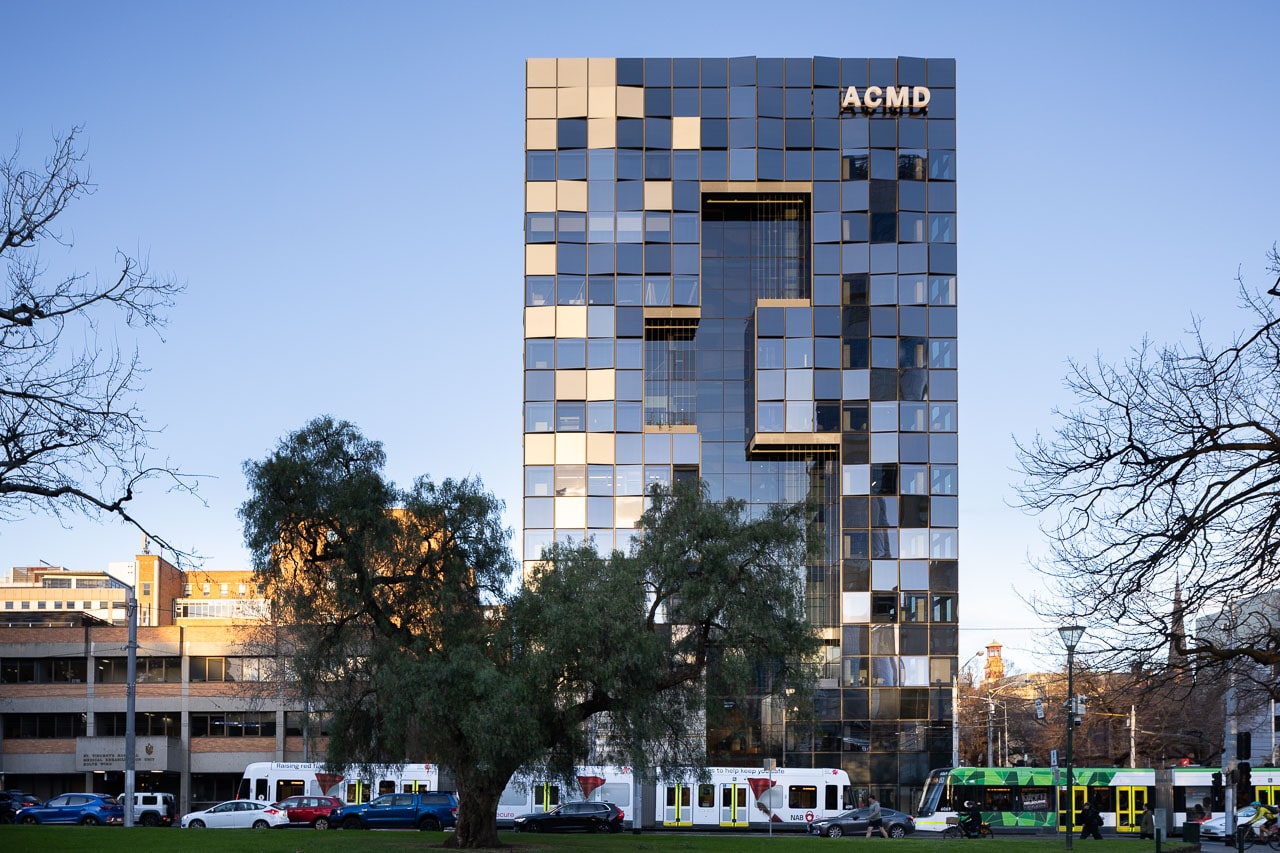
It’s this final step that now has Associate Professor Judge and his team on the move. They’re one of the first projects headed to the new Aikenhead Centre for Medical Discovery (ACMD) based at St Vincent’s Hospital.
The purpose of the ACMD is to accelerate the translation and commercialisation of research. This includes the delivery of much-needed, cutting-edge medical and healthcare solutions with a focus on MedTech, biotech and digital health.
For Associate Professor Judge, taking the RBI project into the ACMD is an exciting step forward for Melbourne Dental School. Cross-disciplinary collaboration, state-of-the-art labs, and access to expertise beyond dentistry mean breakthroughs can reach patients sooner.
“The fun bit of research is actually not being in your silo, it’s getting out of your comfort zone and talking to other people about evidence-based and innovative practice. That’s what the Aikenhead Centre for Medical Discovery is really about," he says.
I hope it establishes a long-term network within the school, and across the faculty, to keep solving problems for these patients. Associate Professor Roy Judge
Commercially too, there is opportunity. In 2023, the global dental implants market was estimated at $5.6 billion.
As the project moves further into its commercialisation journey, Associate Professor Judge and his team have not lost sight of their original ambition. In fact, with the move into the Aikenhead Centre for Medical Discovery, realising their goal now seems much closer.
“It’s really exciting to be in a group that has an opportunity to make clinical change,” says Associate Professor Judge.
Learn more about the Aikenhead Centre for Medical Discovery
Enquire how to start your journey to commercialise your research