By Jane Metlikovec
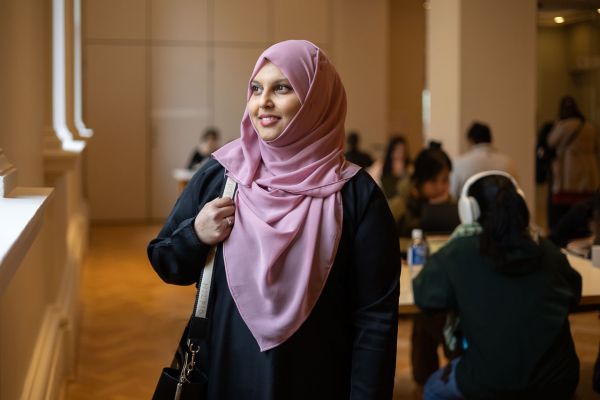
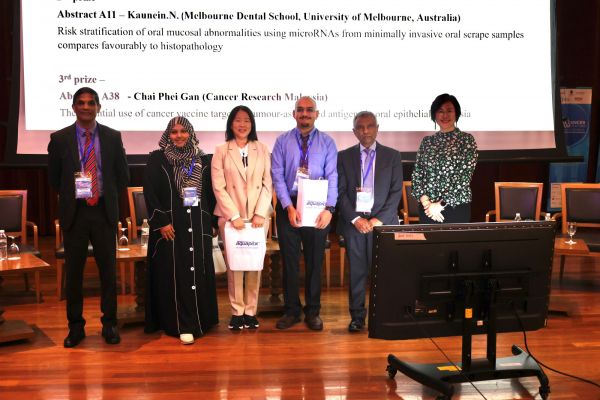
Dr Nadia Kaunein won the first place for Outstanding Research at the International Association of Dental Research (IADR 2025) in Barcelona, Spain in the Clinical & Translational Study Network; second prize at the Global Oral Cancer Forum 2024 in Kuala Lumpur, Malaysia and runner up in the prestigious Hatton Award for the whole of Australia and New Zealand division. As a result, Dr Kaunein was one of the two representatives from Australia and New Zealand who secured a scholarship to the global Session of International Association of Dental Research (IADR 2024) in New Orleans.
It’s 9am in Chennai, India, and new dental intern Nadia has just begun seeing the day’s patients at the dental hospital in her university.
Although it’s early, the dental hospital is flooding with patients because the burgeoning working class is unable to afford quality private dental care, no matter the pain or emergency. They come to dental hospitals based within universities for cheap or free treatment.
As she witnesses the steady stream of patients presenting with various oral conditions – including cancers due to things like betel nut chewing, smokeless tobacco use and tobacco smoking as well as everyday abscesses from poor oral health – Nadia knows where her career is headed.

Credit: Peter Casamento
Health equity is at the root of the problem
Looking back on this chapter in her life, Dr Nadia Kaunein (MPH 2018) says she always knew that focusing on individual patients in clinics was a ‘Band Aid’ solution to deeper societal problems.
“Smoking, drinking, smokeless tobacco use, betel nut chewing and now today with vaping, these aren’t just bad lifestyle choices,” Dr Kaunein says. “We must look deeper because there is enough research that connects lower socio-economic status with poor oral behaviours, leading to compromised oral health outcomes eventually. We must ask ourselves, ‘why do people from low-income areas have more health-compromising behaviours in the first place?’”
And we see that it’s because of the context, the lack of privilege to choose better or healthier dietary habits, or having the economic burden of choosing between paying for a preventative dental visit or buying groceries. Dr Nadia Kaunein
Or, Dr Kaunein says, it’s because of fewer public healthcare options that come with excruciatingly long waiting lists, and sometimes crushing work hours and the related stress, too. “These are the same inequalities that limit their opportunities and cause ‘victim blaming’, where the burden is placed on an individual and their ‘lack of awareness’ instead of addressing the contextual factors, which create risky habits that cause poor health outcomes. We can’t lecture about ‘lifestyle changes’ while ignoring the systems that make healthy lives impossible.”
From the clinic to the classroom
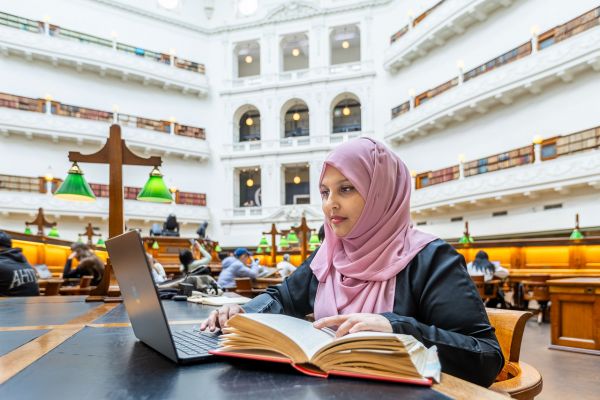
Appalled by what she was seeing, Dr Kaunein turned to research. “Clinical practice and individual patient care is important and has its place, but I wanted more than just that,” she says. “I wanted to make a bigger impact at a population or community level, rather than just at an individual level.”
This wasn’t an ‘India problem’; this issue of oral health equity was worldwide, and changing public policy on an amplified scale was now the young dentist’s goal. It was 2017 when Dr Kaunein joined the University of Melbourne as a dentist who had embarked on an academic journey and was now studying her Master of Public Health, with a specialisation in Epidemiology and Biostatistics.
I was really just trying to understand how to do robust research, how to do it well, through my Masters, before I started my PhD at Melbourne Dental School, which is where I really started looking closely at biomarkers for early detection of oral cancer. Dr Nadia Kaunein
Detecting early signs of cancer
Through her PhD, Dr Kaunein developed an early version of a mouth scrape test to detect early signs of cancer by tracking tiny molecules called microRNAs, some of which are closely related to cancer changes.
The goal was to determine if the scrape could eventually replace or serve as an adjunct to the current oral cancer detection practice of invasive biopsies, which can be painful and invasive for patients – not to mention the cost attached to do this at a private practice.
It was in her second and third related research projects that Dr Kaunein says progress really began.
"We found that scrapes are similar to biopsies, but they’re not exactly the same. They give us similar information, but they aren’t a like-for-like replacement,” she says.
“But then, in the third project, we used biopsy results as the gold standard for diagnosis, then developed an algorithm based on certain microRNA expression levels from the scrapes. This algorithm categorised patients into high or low-risk groups, and when we matched against biopsy results, it correctly identified high-risk cases 89 per cent of the time. It wasn’t perfect, but for a non-invasive test, that’s promising, and this was the proof of concept required for us to investigate this further.”
Dr Kaunein has won numerous prestigious awards for her research in this field, but she doesn’t spend much time reflecting on her achievements; she has more pressing issues and projects on her mind.
Prevention starts even before the patient is in the dentist’s chair
“The area that I’m working on right now is oral cancer epidemiology, where I study the trends in Australia and worldwide on oral cancer burden – how and why oral cancer occurs in different groups of people. I look for patterns, causes, and risk factors to help prevent, detect, and control it. I’m also examining the social inequalities that influence who is most affected by oral cancer and what policy changes can be implemented to reduce this cancer burden in the population.”
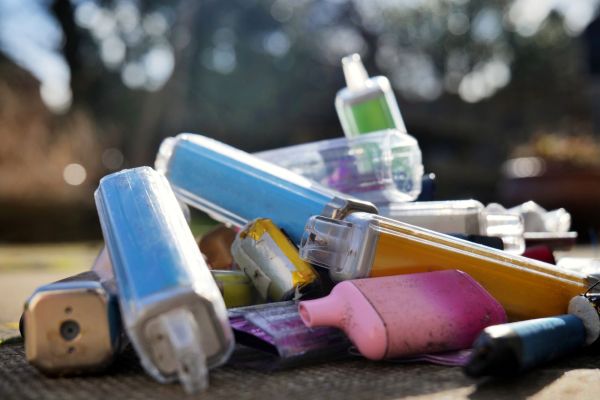
Which also takes Dr Kaunein to another current project – this time on vaping.
“We’re creating a vaping education module, in collaboration with Oral Health Victoria, for oral health practitioners, to help them not just to say ‘it’s bad,’ but to give them real tools: The latest research, policy stances from the Australian Dental Association and World Health Organization (WHO), and even helplines to refer young patients to,” Dr Kaunein says.
Dentists need this information to have effective conversations in their clinics. We can't just tell people, and that includes parents and young people, to ‘be more aware’. Dr Nadia Kaunein
“We need to tackle the unfair social gaps that cause people to have different health outcomes. Which means, it is not just advocating for providing Medicare dental care, because that is treatment-focused. We need to be prevention-focused and advocate for big policy changes that can fix the deeper social issues causing these health differences in the first place.”
This takes Dr Kaunein back to the goal she developed as an intern, and why she does what she does each day at the Melbourne Dental School and Melbourne School of Population and Global Health: “My hope is that I do some really good impactful research in dental public health that will drive some policy change and to make a difference at a population level.”