Since the early 1970s, oral therapists have played an increasingly important role in supporting the oral health of Victorians, as a new book and exhibition recognise.
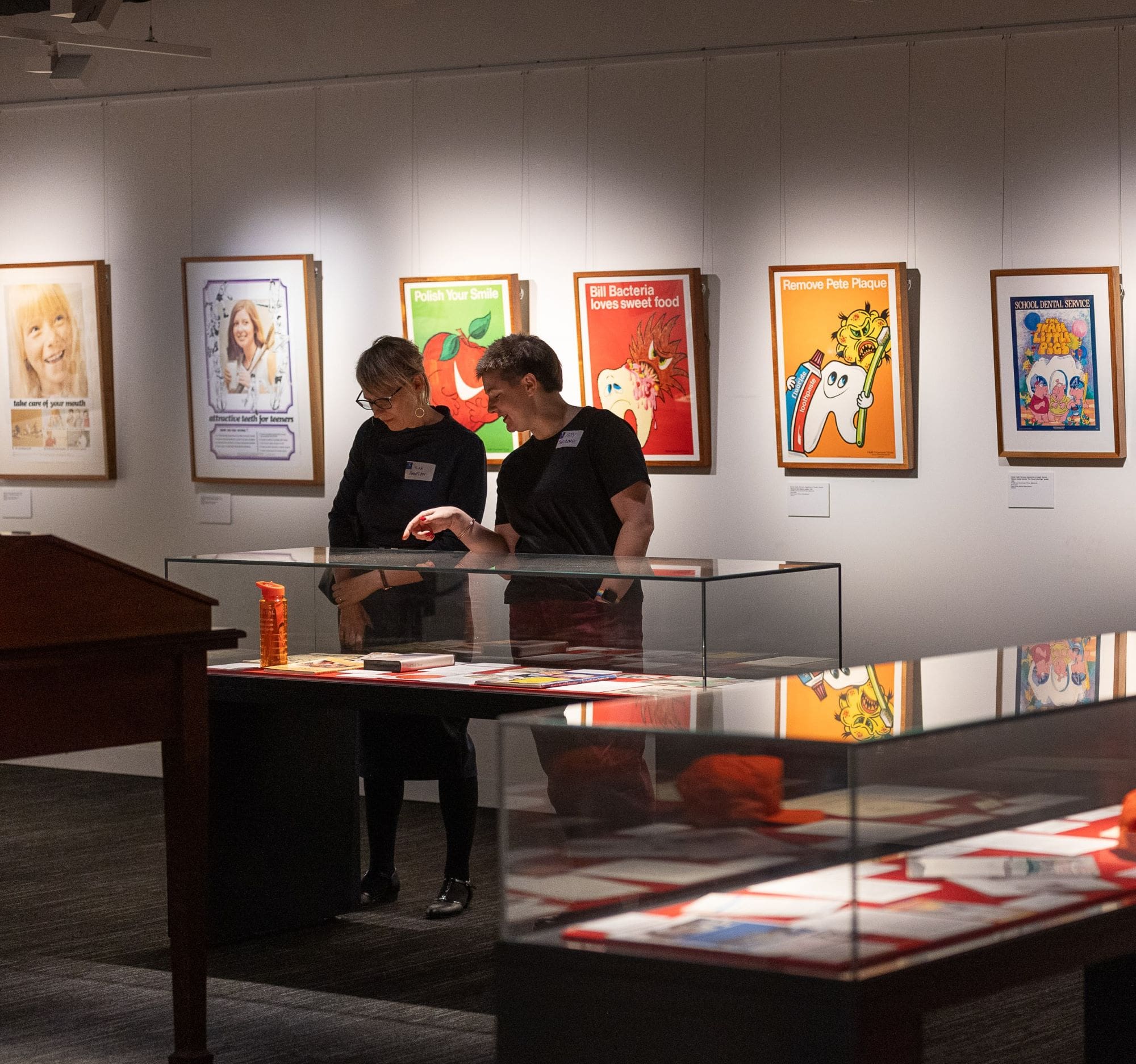
Certificates, class photographs, wax teeth, uniforms, class notes, and archived papers documenting key legislative and policy changes that allowed dental therapists to begin practising and developing the profession in Victoria have all featured in an exhibition and book that recognises and celebrates their contribution.
Shaping a Profession: 50 Years of Dental Therapists traces the journey of dental therapy through the lived experience of students, the dental therapists, and the academics who educated and trained them.
The exhibition at the University of Melbourne’s Medical History Museum was led by Professor Julie Satur, Professor of Oral Health and Director of Engagement and Indigenous Programs at Melbourne Dental School; Professor Mike Morgan (MDSc 1985, PhD 1996), Honorary Curator of the Henry Forman Atkinson Dental Museum; Dr Jacqueline Healy, Director of the Medical History Museum at the Faculty of Medicine, Dentistry and Health Sciences; and Tess Scott, the registrar of faculty museums.
The exhibition and book highlight how dental therapy has evolved to play a far-reaching and significant role in Victorians’, and indeed Australia’s oral healthcare. Professor Satur was one of the first cohort of dental therapists to begin a two-year training program in Melbourne’s Dental Therapy School, established in 1975 under Commonwealth government funding.
Professor Satur recalls that, at the time, “You had to be right-handed, female, under 25 and unmarried” to train as a dental therapist. Upon graduating, dental therapists worked exclusively for the School Dental Service providing check-ups, X-rays, fillings and extractions, preventive care and oral health promotion for children and adolescents in schools. Professor Satur recalls they treated many children who may never have received treatment otherwise.
The exhibition and book illustrate how far dental therapy has progressed since the 1970s and key steps along the way, such as getting the discipline into the university sector, which provided dental therapists with an appropriately recognised qualification. Dental therapy and dental hygiene were also combined into a new profession – oral therapy.
Changing regulations to open up the profession’s opportunities, usage and visibility were also an important step. Today, dental and oral health therapists work in oncology wards, Indigenous communities, outreach programs, public and private general dental and specialist practices, disability, aged care and special needs settings, community and school dental programs in policy, academic research and teaching roles.
As a dental therapist, I could see that our skills could be used far more widely given the right regulation. Once we achieved that, we then worked to move our students out into other under-served community and practice settings to develop their skills, and to show how they could contribute to improving oral health says Professor Satur.
“I’m so proud of the way this profession contributes to improving oral health and increasing access to dental care.”
I was the first female promoted to Professor in the Melbourne Dental School, but I’m more proud of being the first dental therapist to be made a Professor at the Melbourne Dental School says Professor Satur.
Read about the publication: go.unimelb.edu.au/tu98
This article is adapted from a piece originally published on Pursuit.
Read more from Dent-AL 2024
Previous story Next: Connecting passion with purpose for a brighter future